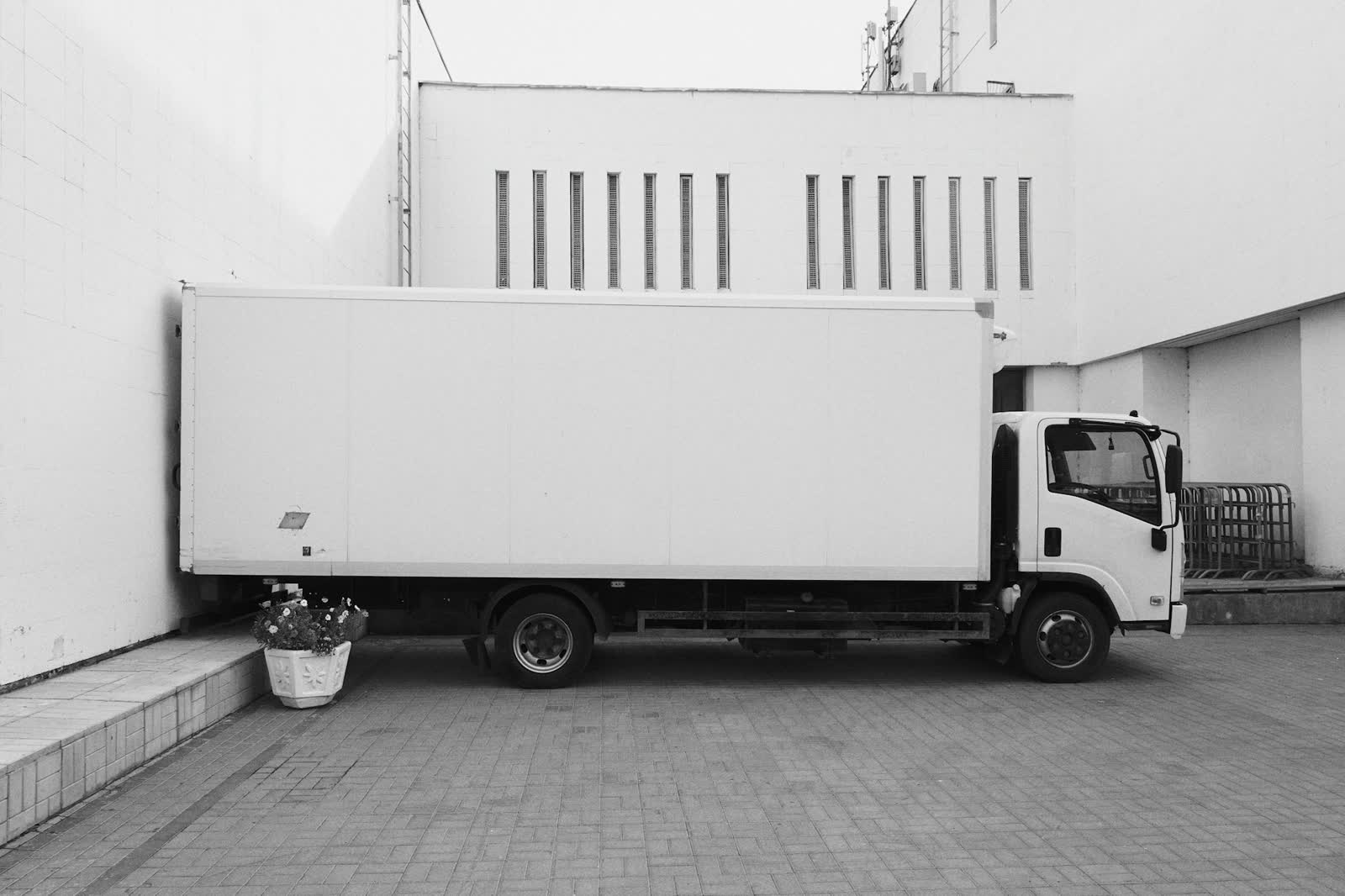
The 4.5 tonne truck is the workhorse of metro delivery in Melbourne. It's big enough to carry a real load and small enough for city streets and shopping centre docks, and in Victoria it can be driven on a car licence. Its name causes a lot of confusion, though, because a 4.5 tonne truck can't carry 4.5 tonnes. This guide explains what the numbers mean, how much fits and when you need something bigger.
GVM, tare and payload: what "4.5 tonne" means
The 4.5 tonnes is the truck's gross vehicle mass (GVM), the most the truck is allowed to weigh fully loaded, including the driver, fuel and freight. Three numbers matter:
- GVM: the legal maximum loaded weight, 4,500 kg for a 4.5 tonne truck.
- Tare: what the truck weighs empty, including the cab, chassis, body and tail-lift.
- Payload: what's left for your freight. Payload = GVM minus tare (and the driver).
A pantech body and a tail-lift add weight, so most 4.5 tonne pantechs end up with a payload of around 2 tonnes. A lighter tray body can carry a bit more, and a heavy body or a big tail-lift carries less. The exact figure is on the truck's compliance plate, and a good operator will tell you before you book.
Typical 4.5 tonne truck dimensions
There's no single standard size. Body dimensions depend on the chassis and the body builder. These are typical ranges for 4.5 tonne pantech bodies in Australia:
| Measurement | Typical range |
|---|---|
| Internal body length | About 4.2 to 5.0 m |
| Internal body width | About 2.0 to 2.4 m |
| Internal body height | About 2.0 to 2.3 m |
| Cubic capacity | About 18 to 25 m³ |
| Payload | Around 2 tonnes, depending on body and tail-lift |
| Tail-lift capacity | Typically 500 to 1,000 kg |
These are typical industry ranges and vary by model. For the exact internal measurements of the Visions Transport trucks, ask us and we'll send them through.
How many pallets fit in a 4.5 tonne truck?
A standard Australian pallet is 1165 × 1165 mm. Pallet count comes down to body width and length:
- Two across needs an internal width of at least about 2.35 m (2 × 1165 mm plus a little room to load).
- Three rows deep needs an internal length of at least about 3.5 m (3 × 1165 mm).
- A body that meets both takes 6 standard pallets. A narrower body loads pallets single file and holds fewer.
Weight usually runs out before floor space does. Six pallets at 330 kg each is about 2 tonnes, which is roughly the payload of the truck. If your pallets are heavy (tiles, bagged product, drinks), you might fill the weight limit with four. Our trucks take up to 6 standard pallets and around 2 tonnes, and we'll check your load against both before the job.
How many cubic metres is a 4.5 tonne truck?
A typical 4.5 tonne pantech body holds roughly 18 to 25 cubic metres. Volume matters for light, bulky freight like furniture, flat-packed fixtures, insulation or cartons of packaging, where you'll fill the body long before you reach 2 tonnes. For multi-drop carton runs, volume and the order you load in matter more than weight.
Tail-lifts on 4.5 tonne trucks
A tail-lift (or tailgate loader) is a powered platform at the back of the truck that lifts freight between the ground and the body floor. It lets a driver deliver pallets and heavy items to sites without a dock or forklift: shops, building sites, schools, small units. Tail-lifts on 4.5 tonne trucks are typically rated at 500 to 1,000 kg, so a single heavy pallet may need to be split. Read more on our tail-lift truck page.
Can you drive a 4.5 tonne truck on a car licence?
In Victoria, yes. A standard car licence covers vehicles with a GVM of up to 4.5 tonnes. Above 4.5 tonnes you need a heavy vehicle licence, starting with a Light Rigid (LR) licence for vehicles over 4.5 tonnes and up to 8 tonnes. The official rules are on the Transport Victoria heavy vehicle licence page.
That's why 4.5 tonne trucks are popular for self-drive rental. But a car licence doesn't teach you to load a pantech, run a tail-lift safely, strap freight or plan a 20-drop run. Businesses that move freight every week usually find it cheaper and safer to hire the truck with a trained driver.
When to step up to a bigger truck
A 4.5 tonne truck is the right choice for most metro deliveries. Consider a bigger truck when:
- Your load is over about 2 tonnes.
- You need more than 6 pallet spaces in one trip.
- You're moving long items (steel, timber, pipe) that won't fit the body.
- The freight needs forklift loading from the side, which suits a curtain-sided truck better.
Sometimes two trips or two 4.5 tonne trucks work out better than one large truck, especially when the drops are in tight city streets. Tell us what you're moving and we'll give you an honest answer.
Booking a 4.5 tonne truck in Melbourne
Visions Transport runs 4.5 tonne pantech trucks with tail-lifts, experienced drivers and live GPS tracking across Melbourne, by the job, the day or on contract. Send us the pickup, drops and what the freight is using the form on this page, or call 0482 389 938, and you'll get a written rate the same business day.